Sunday, May 5, 2019

DANCE, EDUCATION & RACIAL DISCRIMINATION IN SCHOOLS

Education plays an important role in the world. It provides individuals the material they need to excel in life. During my middle/high school years I attended a performing and fine arts school. In this school, we learned the curriculum and tapped into our talents. My P.A (performing arts) was vocal in middle school then high school I switched to dance. In vocal I learned a lot about music, there was much more material for students to learn and apply to themselves then just singing. On the other hand in dance, I did not learn much, only technique and how to move the body. We never picked up a book until it was required for P.A's to have written assignments. Even then, the work that was given to us dancers in high school, we could not make sense of it. Our teacher struggled as well with giving us the purpose of why this became a requirement. "Our principal wants more than just seeing you all perform." I did not mind gaining more knowledge about dance by reading about it in a textbook, I felt blindsided by everything else there is to learn about dance. Although, the education of dance was not as broad as I thought it would be. The education is different from what students learn in a classroom versus their performing arts. There should be a dance education that teaches students/dancers, history, background, traditions, creation, terms, and much more about dance.

Dancers should be exposed and taught the education of dance. I find it important for students to know the many different experiences people have had with dance. Whether it's based on racism, having a disability, self-esteem, confidence, learning dance, etc. I searched for journal articles that discuss dance as an education. A success with my finding, I learned that dance can be taught by people with disabilities, there are numerous books that talks about dance. Discussing the history, the environment, influences, and so on. There are two journal articles that I found inspiring and educational about dance. "Capoeristas, Arabesques, and Attitudes: Children's Books About Dance and Movement," by Jennifer M. Graff and Denise Davila. This article discusses and examines picturebooks about dance and movement. Each picture book talks about something different that children and adults can relate to. There are books that talk about racism in the dance world and a story of the individual that left their mark during that time, the environment such as animals influencing children by imitating and forming a dance or movement just by observing the animal.

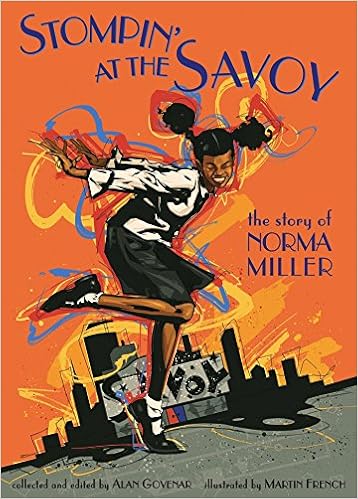
Image result for peg leg bates book Image result for stompin at the savoy the story of norma miller

Image result for flora and the flamingo
Flora and the Flamingo by Molly Idle

Dance has been alive for many years and people have had their ups and downs with it. During the 1800s discrimination came about, a law was created and separated people from each other, for example, the Jim Crow Law. This law says all races are equal but had to have separate public facilities. The "separate but equal" idea did not mean anything. It erupted more hatred, crime, oppression, and violence. Racial discrimination has oppressed and limited people of color from doing more for themselves. Some African American dancers that have faced discrimination in the dance industry are Alvin Ailey, Misty Copeland, Carmen de Lavallade, Arthur Mitchell, Raven Wilkinson and many more. These dancers have paved the way for future students that dream, trains, and make sacrifices to be in a professional dance company. 


For this research project, I created 6 questions to interview students in my "Modern Dance I" class with and a survey with the same questions for students that did not want to be recorded, here are their responses:


  1. Why did you start dancing?
  2. What do you plan to do with your dance background?
  3. How does dance affect your education?
  4. What type of dance style do you gravitate towards and why?
  5. What are your views on performing arts in the school system?
  6. Have you ever experienced discrimination or discriminated others in dance? 


Dancer: Keisha Cadeus


Dancer: Sharif Claxton


Dancer: Jerard Johnson


Dancer: Kaitlyn Romero + freestyle


Here's the piece the dancers and I created for my independent study course. These dancers are from my "Modern Dance I" class. The dance style of this piece is hip-hop, jazz, and jersey club.
Songs: Abusadamente- MC Gustta
            Cardi B- Money
            DJ Lil Taj feat. Panic- Flawless (I Woke Up Like This)


Here are other videos of the piece from a different angle:


Below you can take the survey if you have any dance background/experience. It's available to all IF the questions apply to you. Thank you!

Link to survey: https://www.surveymonkey.com/r/D9MQZM3

References:

Keisha Cadeus

Sharif Claxton

Graff, J. M., & Davila, D. (2014). Capoeiristas, arabesques, and attitudes: Children's books about dance and movement. Journal of Children's Literature, 40(1), 70-79. Retrieved from https://draweb.njcu.edu/login?url=https://draweb.njcu.edu:2085/docview/1538319611?accountid=12793

Jerard Johnson

Kaitlyn Romero

https://www.youtube.com/watch?v=D9vKcxlNkq4

Monday, April 29, 2019

Book Club Chapter 5-6


Image result for relation trust with teachers and students

At last, we have come to an ending of the book, "Organizing Schools for Improvement: Lessons from Chicago." The last two chapters went into more details of the relationship between teachers and students, as well as discussing the results from each study. Do you believe it's important for teachers and students to have relation trust? "Relation trust refers to the interpersonal social exchanges that take place in a group setting. Research has found it to have a particularly strong impact on student achievement in school communities (eleducation.org). I can relate to having a relational trust with a teacher. In high school, I used to struggle with algebra honors. I knew the teacher offered his help after school to practice and go over the material that we learned each day in class. Yet, I never took it upon myself to stay because I was shy, felt like I could not persevere in this subject, and did not like how he taught. I felt this way until one day, his approach for me to stay after class was different, encouraging, and welcoming all at the same time. I gave in and excelled in the class. Relation trust gives students the opportunity to ask and learn more from their teachers, especially when unable to understand the material.

Image result for trust fall meme
What I Think When Students Should Leave Their Trust In Teachers Care
Although students and teachers can benefit from relation trust it can also go wrong. What I mean by this is boundaries can be crossed on both ends. It can become an incident where the student or teacher are pursuing each other within more of what the relationship is supposed to be. Below is a short clip of a teacher who was arrested for having sexual contact with a student.


There are numerous amount of cases like this, and many schools have similar incidents take place for, months to years knowingly and unknowingly. It goes from treating students as if they're your own to inappropriate behavior. I believe relation trust is important but to an extent. There should be rules clearly stated and no other impression made between the student and teacher. All in all, this book gives the pros and cons of how students attendance and academics can improve.


Wednesday, April 17, 2019

Book Club Chapter 3-4

In chapter 3 and 4 of "Organizing Schools for Improvement Lessons from Chicago," the improvement for students to excel in school continued. This time they're testing the framework of the essential supports. Using this essential support, the focus is to examine students improvement with engaging in school and the changes in their learning towards reading and mathematics. At first there were 36 separate organizational measures from each school, later it was combined into 14 indicators of the five essential supports. The core indicators of the five essential supports are, school leadership, parent-community ties, professional capacity, student-centered learning climate, and instructional guidance. Each support has a different purpose that will aid students progress in school. "We categorized schools as strong on an essential support if they placed among the top quartile of Chicago elementary schools based on the 1994 survey data for that core indicator. Similarly, schools ranked in the bottom quartile on a core indicator in 1994 were classified as weal on that essential support" (Bryk et al, 2010, p. 83). Below are the charts:


After looking at both of the bar graphs I question how important are the five essential supports. I do not think the supports can improve schools in general because many schools lack these core indicators, even with bringing attention to it. Parent involvement I find the most important for schools or students to improve in school. When parents are involved it encourages and forces students to do better and parents can help with what their child is lacking. Some reasons why the parent involvement is weak because, some parents do not care for education, understand it, or know how to teach it. Also student-centered climate I find important as well. In many communities, schools are surrounded by violence or there can potentially be violence. For example, my middle/high school in my opinion is surrounded by violence. Across the street from the school there's a liquor store. Students would enter the liquor store after school, some would be able to get away and purchase items, and some would not. The adults that crowd the liquor store tends to cause trouble with the students sometimes because they're under the influence. Attempting to sell and bribe students to give them money to obtain liquor and tobacco products, in result gaining something out of it too which is money. The five essential supports I find is deeper than what their purpose are when looking at the surrounding of the schools. Was your elementary, middle/high school surrounded by violence or has the potential to be in violence?

Image result for schools surrounded by violence

Sunday, April 14, 2019

Book Club Chapter 1-2

The first two chapters of "Organizing Schools for Improvement Lessons from Chicago," was very interesting and informing. It discussed the importance, advantages, and disadvantages of student attendance. A study was conducted to examine a change in school with adjusted improvements. "For the purposes of this study, we developed three such indicators: the first focuses on trends in student attendance, and the second and third are based on trends in students' reading and math test scores" (Bryk et al, 2010, p. 29). Yes, attendance is important in schools, although it is not ideal for students to be on time or attend school every day. Some reasons for students to be absent or marked absent are illness, family emergency, tardiness, medical appointments, religious services, etc.

Image result for attendance in school


When students are absent it will hinder their achievement. With this issue, the attendance rate in Chicago school has gone down. How can they improve this? "For example, the simplest way for a school to improve its attendance is to enroll "better" students" (Bryk et al, 2010). I agree and disagree with the statement. I agree with this because "better" students will improve the attendance rate and achievement. On the other hand, what does a "better" student looks like and supposed to do? If schools sought for better students, they're leaving behind the students that do not have control over their lack of attendance. Also, those students may not be behind on their academic work just the status. Another reason why students are absent is due to the lack of safety at school. I remember attending middle/high school in my community, there would be police officers at every entrance making sure we left the premises without drama. Students from different schools would come to my middle/high school starting trouble and vice versa. Gang violence was the biggest issue and one way the school and city tried to stop this is by getting the police involved. A handful of males would come to school in the morning but leave before school ended, or not show up at all. The attendance in juvenile centers is more common than regular attendance in public schools.

Image result for cops on school premises 

In class during group discussions, the discussion leader of my group asked if we feel that teachers are fully responsible for students education. This was brought up when reading about the approach to improve academics in reading and mathematics. I do not feel teachers are fully responsible for students education. They're responsible for their education and academic growth in school. Out of school, it's not in their control anymore and up to the parent's to make sure the child is completing the assignments and studying. Education does not start and end at school, we learn from our environment, peers, family, and strangers. Nowadays, teachers are not as motivated or encouraged to inspire and push students to learn to the best of their ability. Some teachers just give up and work with those who understand the material, and do their assignments. There are different types of students in the classroom. I believe public schools can improve students academics by learning and adapting to different ways students can get engaged, learn, and understand the material. What do you think? Should teachers be held responsible for students education?

Image result for different types of students in a classroom

Saturday, March 16, 2019

Part IV: The Bottom Line

“Our agenda is to restore quality to education by increasing competition and by strengthening parental choice and local control (p.184).” In the last section of “School”, it’s discussed how education turned into a competition which will result in good things happening for schools but really the government. The quote above was an assumption of mine. By strengthening parental choice, in what way will it help their child? Education in American schools did not mainly start off with teaching students the right way. The right way meaning all of the curricula we have today in school was not the ideal goal. At the time immigrants were traveling to America to be Americanized and live the dream. “Traditionally, America’s public schools had aimed to educate citizens to live in a democracy (p.184).” Students were being prepared and influenced for the work field not excelling in mathematics, reading, and writing, etc.


“Corporate leaders and business associations viewed schools as crucial in producing a trained workforce that would strengthen American international competitiveness (p.176).” I choose to argue with this quote because a school should not be looked at in this way. The purpose of what a school is and provides is taken away. “We are seeing examples, that are mostly faculty. By getting new textbooks, by getting a new principal or assistant anecdotal
so far, of so-called regular schools offerings, by replenishing their principal (p. 205).” I view this as for looks and not saying how it will benefit students in school.


“Finally, where the bottom line matters in schooling- the classroom- no one knows for certain whether all the testing, all the required courses, and all the penalties and rewards get teachers to teach better and students to learn more (p. 182).” This quote made me think about the time high school students had to take the HSPA- High School Proficiency Assessment. The teachers were shocked, confused, and concerned for us students. It came out of nowhere we had a limited amount of time to practice, understand, and aim to reach the highest score. I remember being caught off guard with this test and having a hard time understanding the purpose of it. To the students, it determined if we were dumb or not. On the other hand, our teachers told us we’re not the only students taking the HSPA and they’ll try their best to help us understand a material they could out figure out themselves. The teachers that understand practiced with us, those that did not just gave us the answers. “You can’t teach a child how to think unless you have something for him to think about (p. 209).” I agree with this quote because it’s very relevant and still true today when teaching students. It’s hard for students to take and apply materials to themselves when they’re not able to find the reason behind it. American education has come a long way from what should and should not be taught. Preparing students for the work field at a young age to making and meeting new academic standards.


Wednesday, February 20, 2019

Part III: Separate and Unequal

Reading part 3 of School got very conflicted for people of color wanting educational equality. “In 1950, African American students were segregated by law in seventeen states. Mexican Americans attended school an average of 5.6 years. And 72 percent of disabled school-age children were not enrolled (p.133).” Separate schools, activities, athlete teams, cheerleading, etc. Being divided did not change the treatment of inequality people of color are receiving. In public schools, black teachers were not as trained like the white teachers, underfunded, and students had to travel a long distance to get to and from school. Once parents became aware of this, they wanted equal opportunity and equal education for their children. There were many issues that arose due to segregation. Even after the law was approved in the 1950s for desegregated schools, it created more tension between the races. People of color experienced many attacks, lost their jobs, home, and this just emphasized inequality more. Taking a stand for better education and equality meant risking their lives and future daily.

Image result for segregated schools Image result for segregated schools

Mexican Americans faced non-motivational comments from teachers and counselors in school. Being put down and told that they will not move further with education or amount to anything. The students wanted to learn and read of their history in textbooks. There was little to none information about it when the students read the textbook. The history that’s provided was negative and no role models. How could they feel great about their culture? Students were not happy with the rules and treatment in school, especially when it came to their first language. “We were not allowed to speak Spanish. We would be given an option. Three days suspension, or three licks with a paddle for speaking Spanish (p.151).” Immigrants traveled to America for more opportunities and it became a requirement for them to be Americanized. Yet ridding them of their first language did not advance Mexican Americans or people in general whose first language is not English. Often students are left behind since they’re not able to keep up in school. The purpose of bilingual education was created for this.

 Image result for speak english meme

I’d like to share a time my sister, Elise, was affected by inequality at her internship for social work. It was an unknowing issue between the supervisor (who is white) and Elise. She felt like her work was never good enough. Whenever she’d submit a form it was in the wrong format according to the supervisor. Elise sought help from another intern (also white) and liaisons to get the correct format. The intern that helped her received good feedback on their form but again Elise did not. Another time, the supervisor asked Elise what other work she does out of the internship and the salary. Elise told her she’s a math teacher along with the salary. The supervisor made a face and replied, “that’s too much.” There were days I’d sit listening to my sister cry due to stress and making everything perfect for her supervisor. And building up the courage to face another day of it every morning. She believes and feels that she was not being treated fairly like the other interns. It was devastating to see her like this and I wondered why she didn’t go to another internship. Why continue to put yourself through that? She saw it as a weird challenge and knew what it will do and mean once she finished. What would you have done? 


Monday, February 11, 2019

Part II: As American As Public School

This section continued on with education, segregation, and Americanizing immigrants. Immigrants traveled to America for a better opportunity that may not be provided, affordable, or exist in their country. Although given this opportunity of obtaining an education, immigrants were still limited to everything the Americans are learning. "Yet even as school enrollments multiplied, questions continually arose about what to teach, whether to give the same kind of education to all children and how to allocate educational opportunities among different groups of children (pp.64)." It was a must that immigrants learned how to speak English and hygiene practices. Those who could not speak English or keep up with academic courses were left behind. (Below is a video from the film "West Side Story").


Since the growth of school enrollments was increasing, what to teach became the main concern. The curriculum children were learning in school did not prepare them for jobs. "... and many school districts introduced numerous specialized occupational programs for children who were expected to become industrial and commercial workers, domestic workers, and housewives (pp.66)." Immigrants are usually placed in these classes, it limited those who were capable of more than working in a sweatshop. To determine who will be the fittest for a specific job, tests were created for people to take. Group intelligence tests were used to identify future officers after WWI, I.Q tests for public schools and SAT to enter college which started in 1941. Through all of this, the condition of public schools was atrocious, and many health issues that children suffered from. I used to work in a daycare center and the cleanliness of the classroom was extremely important. After breakfast, lunch, and dinner the staff would have to wipe the tables. Washing and sanitizing our hands back to back. Dress-up costumes, blankets, and stuffed toy animals were in the washer every two or three days. All the toys, building blocks, bathroom, cubbies, literally everything needed to be cleaned daily with bleach and water.

Children suffering from tuberculosis.

Aside from the trial and errors with American public schools, it did bring educational opportunities to many people. "Its greatest success was its ability to expand and absorb millions of children, making elementary and secondary schooling nearly universal and providing educational opportunities to children across the nation (pp.70)." Children and adults learned things that were not taught or practiced within their home. 

Wednesday, February 6, 2019

Part I: The Common School

Growing up was education a problem for you in any way? Whether it's from obtaining education or teaching it. After reading Part I of School, I learned some interesting things regarding education. Often the content individuals learned in school took away their identity. It was stripping them of their religion, and more. I can see how this could be a problem or concern for a very religious family, although this is what happens when people are being taught things out of their culture and traditions. They're adapting to society, it can be a good or bad influence on the individual. Another issue that people faced with education is not being able to afford it. Referring back to the reading, at one point education was not open to everyone in America. It was prohibited from people of color, segregation was in full effect at this time. A phrase I took from the text, "...education was often hidden and dangerous undertaking (pp.24)." Back then, education, in my opinion, was distributed in a difficult way. From who will receive it, to who should teach it, and what should be taught. During slavery, black people would sneak to read a book. If caught, they were threatened, belittled, and disciplined. Today, people are still struggling to obtain an education. "Only the most privileged had the  means to continue through college or university (pp.22)." Education is continuously changing and expanding for better or for worse. 


Here's a meme I found humor in regarding the education system:
Image result for today's education system meme


References:

  • Streep, M., Tyack, D. B., Bernard, S. C., Mondale, S., & Patton, S. B. (2006). School: The story of American public education. Boston: Beacon Press.
  • Debunking Education Memes, Part One. (n.d.). Retrieved from https://www.educationworld.com/teachers/debunking-education-memes-part-one


Tuesday, January 29, 2019

Literacy History

The earliest I’ve experienced becoming literate is at home. My first teachers are my family members. Learning how to read and write from my brother and sister to my parents teaching me a different language, Creole. In my household being able to read and write was important. “It’s needed to succeed in this world” my father would always say. As I grew up learning my family’s language became important as well. If not, communicating with my family in Haiti would be difficult and frustrating. I had to be able to pronounce, speak, sing, read, and write in Creole. The most challenging part with this language is writing it. I began to pick up the language the more I was surrounded by it. Often at times, I felt discouraged because I barely understood what someone would ask me. Nodding, smiling and laughing are my go to when I can’t respond or understand. As many times I struggled, I did not let it keep me from learning more and practicing. I had my parents support to correct, reassure, and motivate me.

Further into school literacy became different and challenging. Inside and outside of school there was a lot of code-switching. I used code-switching often between my peers and teachers. Inside of school students learned how to speak, read, and write in French and Spanish. Learning these two languages has a big contrast from elementary school to high school. Being able to count from 1-20 was a big deal in elementary school. I remember in one of my English classes in high school, we began to read plays by William Shakespeare. The vocabulary and language were not the easiest to understand. Often I highlighted and circled words I didn’t know. This was also discouraging and uncomfortable to read words that I’d usually see people perform. I feel this impacted my development to reading poetry books. I read poetry with rhythm in my head to let the words flow and feel them.


Around the time I was able to read and write in my first and second language, I began to feel literate. But also having the ability to learn, and use these two tools for other languages in the world. I enjoyed writing in cursive a lot when I was younger. I enjoy reading, fiction, non-fiction, poetry, drama, and a few comics. I tend to listen to music and films in different languages rather than reading it. The way I feel today as a literate person is average. There is so much more to learn and expand that I can bring to my vocabulary. I continue to use literacy by reading books, speaking and writing my second language more. My mother and I often help each other with how to spell or pronounce a word in Creole and English, we learn from each other. She inspires me to be as good as her with quickly developing Creole as she does the same with English. Literacy inspired me to learn different languages, practice, and expand my vocabulary.